Chapter X

BENCH AND BAR OF SHELBY AND MOULTRIE COUNTIES


BENCH AND BAR OF SHELBY AND MOULTRIE COUNTIES

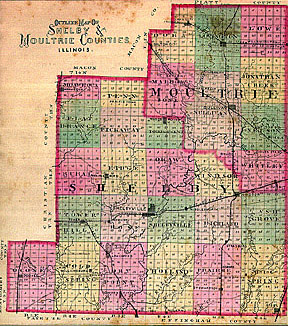
SHELBY COUNTY

MOULTRIE COUNTY


BENCH AND BAR OF SHELBY AND MOULTRIE COUNTIES

HORACE GREELEY once said that the only good use a lawyer could be put to was hanging. And a great many other sensible people entertain the same opinion. There may be cause for condemning the course of certain practitioners of the law, but the sam e may be said of men within the ranks of all the professions. Such men should not be criticized as lawyers, doctors, or the like, but rather, as individuals who seek, through a profession that is quite as essential to the welfare of the body politic as t he science of medicine is to that of the physical well being, or theology to the perfection of the moral nature, to carry out their nefarious and dishonest designs, which are usually for the rapid accumulation of money, although, at times, for more evil a nd sinister purposes, and which are the instincts of naturally depraved and vicious natures.

None of the professions stand alone in being thus afflicted. All suffer alike. The most holy and sacred offices have been prostituted to base uses. And it would be quite as reasonable to hold the entire medical fraternity in contempt for the malpractic e and quackery of some of its unscrupulous members, or the church, with its thousands of sincere and noble teachers and followers, in derision for the hypocrisy and deceit of the few, who simply use it as a cloak to conceal the intentions of a rotten hear t and a corrupt nature, as to saddle upon a profession as great as either the short-comings of some of its individual members.

By a wise ordination of providence law and order govern everything in the vast and complex system of the universe. Law is everything; lawyers nothing. Law would still exist, though every one of its professors and teachers should perish from the face of the earth. And should such a thing occur, and a new race spring up, the first instinctive desire of its best men would be to bring order out of chaos by the enactment and promulgation of wise and beneficent laws. Law in the abstract is as much a compone nt part of our planet as are the elements earth, air, fire and water; in a concrete sense, as applied to the government of races, nations, and peoples it plays almost an equally important part. Indeed, so grand is the science and so noble are the objects sought to be accomplished through it, that it has inspired some of the best and greatest men of ancient and modern times to an investigation and study of its principles. And in the long line of great names handed down to us from the dim and shadowy porta ls of the past, quite as many good men will be found enrolled as members of the legal profession as in any of the others, and owe their greatness to a sound knowledge of the principles of the law and a strict and impartial application of them. Draco, amo ng the first and greatest of the Athenian lawgivers, was hailed as the deliverer of those people, because of his enacting laws, and enforcing them, for the prevention of vice and crime, and looking to the protection of the masses from oppression and lawle ssness. It is true that many of the penalties he attached to the violation of the law were severe and even barbarous, but this severity proceeded from an honorable nature, with an earnest desire to improve the condition of his fellow-men. Triptolemus, h is contemporary, proclaimed as laws, "Honor your parents, worship the gods, hurt not animals." Solon, perhaps the wisest and greatest of them all, a man of remarkable purity of life and noble impulses, whose moral character was so great and conviction as to the public good so strong, that he could and did refuse supreme and despotic power when thrust upon him, and thus replied to the sneers of his friends:

Nor wisdom's palm, nor deep-laid policy,
Can Solon boast. For when its noblest blessings
Heaven poured into his lap, he spurned them from him.
Where was his sense and spirit, when enclosed
He found the choicest prey, nor deigned to draw it?
Who to command fair Athens but one day
Would not himself, with all his race, have fallen
Contented on the morrow?
What is true of one race or nation in this particular is true of all, viz., that the wisest and greatest of law-makers and lawyers have always been pure and good men, perhaps the most notable exceptions being Justinian and Tribonianus. Their great learni ng and wisdom enabled them to rear as their everlasting monument the Pandects and Justinian Code, which, however, they sadly defaced by the immoralities and excesses of their private lives.

Among the revered of modern nations will be found, conspicuous for their great services to their fellows, innumerable lawyers. To the Frenchman the mention of the names of Trouchet, Le Brun, Portalis, Roederer, Thibaudeau, and others excites a thrill of pride for their greatness and of gratitude for their goodness.

What Englishman, or American either, but that takes just pride in the splendid reputation and character of the long line of England's loyal, lawyer sons? The Bacons, father and son, who, with Lord Burleigh, were selected by England's greatest Queen to ad minister the affairs of state, and Somers and Hardwicke, Cowper and Dunning, Elden, Blackstone, Coke, Stowell, and Curran, who, with all the boldness of a giant and eloquence of Demosthenes, struck such vigorous blows against kingly tyranny and oppression ; and Erskine and Mansfield and a score of others. These are the men that form the criterion by which the profession should be judged. And in our own country have we not names among the dead as sacred, and among the living as dear? In the bright pages of the history of a country, founded for the sole benefit of the people, and all kinds of people, who more than our lawyers are recorded as assisting in its formation, preservation, and working for its perpetuity. And among the best and truest sons of ou r own State, and the good counties of Shelby and Moultrie, are their lawyers, men who are capable of feeling and uttering such divine sentiments, as "With charity for all; with malice towards none."

SHELBY COUNTY

PRIOR to 1835, the judges of the Supreme Court of Illinois performed the duties of circuit judges. In that year, a law was enacted establishing the distinctive office of circuit judge, and dividing the state in separate judicial districts, which c ontinued to February, 1841, when the old system was re-established, and remained in force till the adoption of the new constitution in 1848.

Page 75


From 1848 to 1877, one circuit judge was elected in each judicial district of the state, and performed all the duties incumbent upon his office. In the latter year (1877), the legislature passed a law organizing appellate courts, and also enlarging the c ircuits by consolidating two into one, and providing for the election of three circuit judges in each of the enlarged districts.

The first judge of the circuit embracing Shelby county was Theophilus W. Smith, of the Supreme Court, whose term of office, as circuit judge, extended from 1828 to 1835. In the latter year, Thomas Ford, afterwards Governor of Illinois, presided, by reque st, in company with Sidney Breese.

The regular successor of Judge Smith was Sidney Breese, who presided from 1836 to 1841. Of this pure man and eminent jurist our state may justly feel proud. He was born in Oneida county, New York, July 15th, 1800, and, at the early age of eighteen, grad uated, with distinction, in the full classical course, from Union College, Schenectady, New York. Soon after his graduation he immigrated to Illinois, and entered the law office of his old friend and school-fellow, Elias Kent Kane, then a resident of Kas kaskia. In 1820 young Breese was admitted to practice, and commenced his professional career at Brownsville, in Jackson county, where, in the conduct of a case before a jury, he was so unsuccessful that he resolved to abandon forever the practice of law. In 1822, however, he was appointed attorney of the second circuit, a position which for five years he filled with honor.

In 1831 he compiled Breese's Reports of the Supreme Court's decisions, the first book ever published in the state. After bearing a conspicuous part as lieutenant-colonel in the Black-Hawk war, he was in 1835 elected judge of the second circuit, which pos ition he retained till 1841, when he was chosen one of the supreme judges of the state. In the following year he was elected for a full term to the United States Senate, upon the expiration of which he became a member (in 1850) of the State Legislature, and he was chosen Speaker of the House.

In 1855 he was again elected circuit judge, and two years later, on the resignation of Chief Justice Scates, he was a second time chosen to the supreme bench, where, having filled the office of chief justice two terms, he remained till the time of his dea th in 1879. The following beautiful and well-merited tribute to this remarkable man is from the pen of Hon. E.B. Washburn, late Minister to France: "The reports of the Supreme Court attest his profound knowledge of the law, the ripeness of his scholarsh ip and the peculiar grace of his diction. No judge that ever sat on the bench could touch the very heart and soul of a lawsuit with more unerring certainty, and his opinions will live as long as the jurisprudence of the state shall exist."

Judge Breese was succeeded in this circuit by Samuel H. Treat, who presided over the courts in the district from 1841 to 1844. Judge Treat is a distinguished jurist of the olden type, and is at present one of the United States district judges. In 1845 G ustavus Koerner was appointed by Governor Ford to fill a vacancy in the supreme bench, and the same year performed the duties of circuit judge in this district He was born in Frankfort, Germany, Nov. 20, 1809, and after graduating with the degree of LLD. from the celebrated University of Heidelberg, he sailed with a party of friends of America, where he arrived in 1833, and during the same year settled in Belleville, Illinois. He attended law-school at Lexington, Ky., and in 1835 was admitted to the bar of the Supreme Court, as he had been formerly to the same court of his native land. He commenced the practice of law at Belleville and soon rose to distinction. He has filled with marked ability the several offices of legislator, lieutenant-governor, c olonel, Minister to Spain, judge of the Supreme Court, and chairman of the Board of Railroad Commissioners. He is still a resident of Belleville, where he has a lucrative practice, and enjoys the high esteem and confidence of all his fellow-citizens, tha n which no greater honor could crown his declining years.

From 1847 to 1849 Judge Treat was a second time called to preside over the courts in this circuit.

From 1849 to 1873 the circuit judges and their respective terms of office were as follows: From 1849 to 1853, David Davis; from 1853 to 1862; Charles Emerson; from 1862 (May term) to 1864; Charles Constable; from 1864 to 1867, Charles Emerson; from 1867 to 1873, A.J. Gallagher.

Of these five representatives of the bench it has been impossible to obtain sufficient data for extended notices. Judge Davis was on the Supreme Court up to the time of his election to the United States Senate, of which he is still a member. Judge Emers on, was a plain, unassuming man and a matter-of-fact lawyer. He went right to the facts of a case, and few of his decisions were ever reversed. He was very kind and accommodating on the bench, especially to the younger members of the bar.

From October term, 1873, to 1876, H.M. Vandeveer was the judge of this judicial circuit. He is a resident of Taylorville, Ill. Judge Vandeveer is a man of fine natural abilities, a most excellent judge of men, untiring and aggressive, and a sound, pract ical lawyer. In both private and public life, and in every official capacity, he has always been found faithful to trusts reposed in him.

In 1877, under the new law, Wm. R. Welch, of Carlinville, Charles S. Zane, of Springfield, H.M. Vandeveer, of Taylorville, were elected judges of the enlarged district.

Judge Welch was born in Jessamine county, Kentucky, Jan. 22, 1828. He received a good education in the common schools and academies of the state, afterwards graduating with the degree of A.B. from Transylvania University at Lexington. In 1849 he entered the law department of the same institution, and in 1851 graduated bachelor of laws. He soon afterward commenced practice at Nicholasville, Ky., where he remained until 1864, when he came to Carlinville, Ill., at which place he has since resided.

He continued the practice of his profession at Carlinville until 1877, when he was elected judge of the fifth judicial district, and at the expiration of his first term in 1879 was re-elected without opposition. He is a fine lawyer, a forcible and logica l reasoner, and withal a man of great popularity, especially among the legal fraternity.

Judge Zane is a native of Cumberland county, New Jersey, where he was born March 2, 1831. His early education was obtained in the district schools of his native state. In 1850 he removed to Sangamon county, Ill., and in 1852 entered McKendree College, w here he pursued a three-years' course of study. In 1856 he entered the law office of Hon. J.C. Conkling, and having been admitted to the bar, he opened in 1857 an office at Springfield, Ill. He afterward formed a partnership with Wm. H. Herndon, former partner of Abraham Lincoln, and did a prosperous business until 1869, when he associated himself with Hon. Shelby M. Cullom and George O. Marcy. He was a member of this firm until 1873, when he was elected circuit Judge, which office he still holds. A c onscientious judge and upright man, he has the confidence and esteem of the bench and bar, as well as the public generally, through this portion of the state.

At the election in 1879 Judges Welch and Zane were re-elected, while Judge Vandeveer was succeeded by Gen. James J. Phillips, of Hillsboro, Ill. Judge Phillips was born in Montgomery county, Ill., and is a distant relative of the celebrated Wendell Phili ps.

Page 76


He was educated at the Hillsboro' Academy, and having in the early life formed a taste for the profession of law, he entered, at the age of 20, the law-office of Davis and Kingsbury, of Hillsboro, where for three years he devoted himself assiduously to pr eparation for his chosen profession. Having been admitted to the bar in 1860, he immediately opened an office in Hillsboro', and commenced practice. In 1861 he recruited a company for the war, and was soon afterward elected captain. His company was att ached to the ninth Illinois Infantry, of which Captain Phillips was appointed major. On the 2d of December, 1861, he was commissioned lieutenant-colonel, took command of the regiment and retained that position until the close of its service. During his military career he had six horses shot under him, and was himself severely wounded five or six times. For distinguished services and daring valor during the war, he was, March 26, 1865, brevetted brigadier-general.

After retiring from the army he resumed the practice of law, and at the time of his election as circuit judge, was acknowledged to be one of the most able and popular lawyers in the state. Being thoroughly conversant with all branches of the law he has a lready, by his impartial and accurate decisions, proven himself to be one of the most accomplished judges on the bench.

STATES ATTORNEYS

IN 1873 the Legislature enacted a law providing for the election of a states attorney in each county, instead of one in each judicial circuit, as the law had required prior to that time.

Under the old system, the states attorneys for this district were as follows:

Wm. H. Brown (pro tem.) 1830 to 1837; Josiah Fisk, 1837 to 1840; Ferris Foreman, (pro tem.) 1840 to 1845; Wm. H. Russell, 1845 to 1846; Harry Lee, 1846 to 1851, David B. Campbell, 1851 to 1852; David B. Campbell, 1852 to 1853; E. Rusk, 1853 to 1856; N.O. Moore, 1856 to 1858; John R. Eden, 1858 [1856?] to 1861; J.P. Boyd, 1861 to 1862; Wm. G. Patterson, (pro tem.) 1862 to 1863; J.R. Cunningham, 1863 to 1865; D.L. Bunn, 1865 to 1869; M.B. Thompson, 1869 to 1873.

Under the new system Capt. Lloyd B. Stephenson has held the office since 1873. On November 2, 1880, Wm. C. Kelley was elected for the ensuing term.

THE BAR

NON-RESIDENT Lawyers - Many were the privations and hardships that surrounded the early bar of Illinois. At that time, owing to the small amount of litigation, attorneys, in order to gain a livelihood from the practice of their profession, found it necessary to follow the court from county to county. Nevertheless, some of the most illustrious legal lights that the state has produced lived in those days. Among the distinguished men that came to practice at the Shelby county court in that e arly day were: Abraham Lincoln, whose name was destined to become immortal throughout the world; E.D. Baker, the Cicero of America, the gallant commander of a regiment in the Mexican war, the brilliant United States senator from Oregon, the brave general who sealed his patriotism with his life's blood at the battle of Ball's Bluff; Gen. James Shields, subsequently the hero of two wars, and United States senator from three states; U.F. Linder, witty and eloquent, eminent as a criminal lawyer and adroit po litician; O.B. Ficklin, a profound lawyer, and leader in the national congress: Judge Joseph Gillespie, a distinguished lawyer and pre-eminently a self-made man; Col. A.P. Field, (from 1837 to 1845) of Vandalia, who afterwards removed to New Orleans; Cha rles Emerson, whose sketch has been given in a former paragraph; J.R. Eden, an able man and good lawyer; A.B. Bunn, a fine criminal lawyer; Gustavus Koerner, whose sketch will be found in the list of circuit judges; James A. McDougal, afterwards United St ates senator from California; Gen. John A. McClernand, who now resides at Springfield.

Former Resident Lawyers - WM. A. RICHARDSON, one of the earliest members of the bar of Shelbyville, was born in Fayette county, Ky., and commenced his educational career in the log school-house at that time so common to his native state. He afterw ard spent three years at Walnut Hill, preparing for college. From there he was transferred to Centre College, Danville, Ky., whence shortly afterward he entered the Transylvania College, at Lexington.

Having finished his junior, he became a student in the law office of Allen & Simpson, and was admitted to practice March, 1831. In 1831 he removed to Illinois and located at Shelbyville. During the following year he opened a law-office at Rushville, Sch uyler county, whence he removed to Quincy in May, 1849. In 1836 he was elected to the legislature of Illinois, and met, as members of the same body, Lincoln, Douglas, Hardin, Shields, Moore, French, Baker, most of whom have become illustrious in the nati on's history. In 1838 he was elected to the state senate, and at the outbreak of the Mexican war in 1846 he raised a company of men, which he as captain led to the battle of Buena Vista and other important engagements. At the expiration of his military service he returned home, and in 1847 was elected to congress, and in 1848 was re-elected by nearly one thousand majority. He continued a member of that body until 1856, when he resigned his seat to make the gubernatorial race of Illinois, in which he wa s defeated by only four thousand votes. He was shortly afterward appointed by President Buchanan territorial governor of Nebraska, and in 1860 was again elected to congress, and in 1863 was chosen United States senator by the legislature of Illinois. At the expiration of his term as senator in March, 1865, he returned to Quincy, where he resided until the time of his death, December 27, 1875, aged sixty-five years.

In 1835, ANTHONY THORNTON, from Kentucky, came to Shelbyville, where he became one of the prominent members of the Shelby county bar. He was chosen a member of the thirty-ninth congress from this district, and was subsequently elected one of the supreme judges of Illinois. In 1879 he removed to Decatur, where he still resides. Judge Thornton is a man of eminent legal ability, and one of the noted men of the state.* *A biography of Judge Thornton is given in another part of this work.

DANIEL GREGORY practiced here from 1835 to about 1852. He was appointed by President Pierce receiver of the land office at Vandalia, where he died a few years ago. He was a fair lawyer and a man of good character.

JOHN R. EDEN came from Indiana to Shelbyville, where he practiced law a number of years. He was for several terms member of congress from this district, and always took an active part in the deliberations of that body. He is an excellent lawyer and a ma n of commanding influence.

ENOCH A. McGREW, a young lawyer of great promise, died a member of this bar in 1879.

ANTHONY T. HALL, nephew and partner of Judge Thornton, came to Shelbyville in 1858, and continued the practice of law here until the time of his death in 1873. He was a young man of fine scholarly attainments, immensely popular, and possessed all the ele ments of a most successful lawyer.

LEWIS B. THORNTON, cousin of Judge Thornton, was for a while a resident attorney of Shelbyville. He came here from Virginia, and prior to the war of the rebellion removed to Alabama.

LEVI HIGHT practiced here between 1840 and 1850. He was a young man of fair ability and promise.

Page 77


W.R. REED commenced the practices of law here in 1860, and soon afterward died. He was a fine business lawyer.

In 1850, MORRIS R. CHEW was a member of the Shelbyville bar, but he soon afterward retired from practice, and has since died.

In the same year, EDWARD EVY was also a practicing attorney here, but in 1852 he removed to California, where he now resides.

For the following biographical sketch of Geo. R. Wendling, formerly a prominent attorney of this place, we are indebted to the pen of another:

"MR. WENDLING was born in Shelbyville, Illinois, on the fifteenth day of January, 1845, and until his recent removal to St. Louis, lived all his life, except his years at college, in his native town. At the Chicago University, he won, at the age of eight een, the declamation prize competed for by the entire Freshmen class, and at this early day in his career, the Chicago press predicted for him a brilliant future, notably the Chicago Times saying in its issue of June 29, 1864, 'he bids fair to rank high a s an orator.' At home he studied a year under the private tutelage of a highly educated clergyman of the Episcopal church. He then returned to Chicago, and took the law course in the law department of the University, and returned in 1866 to his home, wh ere he has since practiced with signal success, his profession of the law, his chief triumphs being won in that branch of the practice requiring the skill, address and powers of an advocate.

"In public life he is widely known as one of the very finest political orators in the West. He was the youngest member of the Constitutional Convention which framed in 1870 the present Constitution of Illinois, and was regarded by the press of Illinois a s the most brilliant orator of that body.

"In January, 1878, he was invited by a large number of the leading citizens of St. Louis to deliver a lecture at Mercantile Library Hall. He chose for his subject, 'A Reply to Ingersoll from a Secular Standpoint.' The result is known. He at once achiev ed a national reputation, and yielded to the very large offers made him to enter the lecture field. In that field he will doubtless remain for several years, and doubtless, too, will verify the prediction of a noted eastern journal: 'He bids fair to bec ome king of the American platform.'"

PRESENT MEMBERS OF THE BAR

HON. SAMUEL W. MOULTON was born in Hamilton, Mass. in 1823, and after receiving a common school and academic education, he went in 1843, to Mississippi, where he remained until the fall of 1845, when he removed to Illinois.

After acquiring a legal education in law offices, he was admitted to the bar in 1847, and commenced the practice of law in Moultrie county.

In January, 1850, Mr. Moulton established his residence in Shelby county, and is still in full practice as a member of the firm of Moulton, Chafee and Headen, Shelbyville. He has always had a very large practice, and has been engaged in some of the most important cases in this part of the state. He held the office of school commissioner of Shelby county for eight years, was elected a member of the legislature in 1853, and for three successive terms. During his first term he was chairman of the committe e on education, drafted and introduced the first bill for free schools in the State of Illinois.

This bill became a law. On the establishment of the board of education in 1857, Mr. Moulton was appointed one of the original trustees of the board, and has been continued in said trust until the present time, he being the only original member now remain ing. For sixteen consecutive years he was president of the board, and was one of the most active advocates of the free school system. In 1856, he was a Buchanan presidential elector, and in 1860, supported Douglas for the presidency. During the Rebelli on he took strong grounds in favor of the government, and acted with the Union party. In 1872, he returned to the Democratic party. In 1864, he was elected to Congress from the state at large, by about forty thousand majority, over his competitor, Hon. J.C. Allen. On November 2, 1880, he was again elected to Congress from the fifteenth district, by a handsome majority. He has one of the finest law libraries in this part of the state; it contains all the reports of Illinois, Indiana, Michigan, Wisconsi n, New York, Massachusetts, the United States and part of the reports of Ohio; also, all of East's reports; all of the American reports; all of Moak's reports; all of the United States digests; Bacon's Abridgements of Common Law, and many other miscellane ous law books.

WILLIAM CHEW was born in Martinsville Clinton county, Ohio, in 1836. He received his literary education in the classical department of the Lutheran University at Springfield, Illinois. He commenced the study of law in the office of Moulton and Chafee in the year 1868, and was admitted to the bar in 1871, and has since continued the practice of law at Shelbyville.

WM. W. HESS was born in Columbus, Ohio, in 1837, and received a common school education in the public schools near that city.

He completed his literary education at Granville, Ohio, and took a scientific course at the Dennison University. He studied law in the office of Swayne and Baber, and in 1859, entered the Cincinnati law school, graduating the same year. He commenced pra ctice in Columbus, Ohio, and in 1866, having removed to Shelbyville, resumed practice as a member of the law firm of Hess and Stephenson. He was appointed master in chancery in 1874, and in 1876, was elected judge of the county court, which office he sti ll holds.

WM. J. HENRY was born in Richmond county, Ohio, in 1823, and received his early education in the public schools of that state.

He studied law in an office at Millersburgh, Ohio, and in 1847, commenced practice at Worcester. After a residence of seven years in Iowa, he removed in 1860, to Shelbyville; where he continued the practice of his profession until 1873. He then removed to Danville, Illinois, where he remained until 1877, in which year he returned to Shelbyville, where he now resides, making real estate and corporation practice a speciality.

Mr. Henry has given his almost exclusive attention to corporation law, and if the management of that class of cases has been very successful. He is also the author of a work entitled 'Ecclesiastical Law and Rules of Evidence, with special reference to th e Jurisprudence of the Methodist Church," which is regarded as a standard of authority upon that subject, and has received the endorsement and been put in course of study by the Bishops of that church. In 1864, he wrote and compiled a digest of Illinois reports.

H.S. MOUSER is a native of Marion county, Ohio; he received his education in the common schools and in the Wesleyan University, from which institution he graduated in 1867. He immediately came West, and soon after entered the law office of Henry and Reed , and pursued his studies until 1869, when he was admitted to practice. He subsequently formed a partnership with W.C. Kelley, which still continues. In 1877, Mr. Mouser was elected county superintendent of schools. He is a clear, forcible reasoner, go od speaker, and possesses in a high degree the elements of a successful lawyer.

LLOYD B. STEPHENSON was born in Loudoun county, Va. He received his literary and scientific education in the preparatory school of the University of Virginia, and afterwards entered the law

Page 78


department of the University of Virginia, (founded by Thomas Jefferson), from which he graduated in 1861. He was a captain in the Confederate army until 1865. In 1866, he was examined and admitted to the bar in Virginia, and in the fall of the same year , having removed to Shelbyville he commenced the practice of law here in 1867. In 1872 he was elected state's attorney, which office he held until December, 1880.

HOWLAND J. HAMLIN was born in 1850, in St. Lawrence county, New York. He was educated at the state normal and training school at Potsdam, and having removed to Shelby county, Illinois, studied law from 1872 to 1875, in the office of Thornton and Wendling . He was examined before the supreme court at Mt. Vernon, in June, 1875, and admitted to practice.

He practiced for a short time at Sullivan, Moultrie county, Illinois, and in 1876 removed to Shelbyville, where he is still engaged in his profession.

He is a man of fine ability and scholarly attainments. He is a forcible and vigorous speaker, and exhibits great tact in the management of his cases. He possesses in a high degree the elements of a successful lawyer.

TRUMAN E. AMES is a native of New York, having been born in that state in January, 1850.

He received his literary and scientific education in the state normal and training school at Potsdam, graduating in 1870. In 1871, he removed to Windsor, Shelby county, Illinois, where he afterward became principal of the graded school of that town. Hav ing pursued the study of law for some time in the office of Moulton and Chafee, he, in 1875, entered the law department of the Michigan University, from which he graduated in 1877, and in the same year was admitted to the bar. He commenced the practice o f law at Windsor, where he remained until May 1, 1880, when he removed to Shelbyville.

J. WILLIAM LLOYD was born in Springfield, Illinois, March 15, 1841. He received his early education in Sullivan Academy, Moultrie county, and in 1859 came to Shelbyville, and in 1860 commenced the study of law in the office of Thornton and Hall. In 1869 , he was elected county clerk of Shelby county, which office he retained eight years. He afterwards formed a partnership with Wm. A. Cochran, in real estate, abstract and insurance business. In May, 1880, he formed a partnership with Truman E. Ames, for the general practice of law.

WM. C. KELLEY, a native of Shelby county, Illinois, received a common school education in the public schools near Shelbyville. He was afterward a student in the Shelbyville Seminary, and Kentucky University, where he completed a full course in the classi cs and mathematics. He studied law with Thornton and Wendling, from 1874 to 1876, when he was examined before the supreme court at Ottawa, and was admitted to the bar.

In 1877 he commenced the practice of law at Shelbyville, and November 2, 1880, was elected State's attorney.

FRANK LINDLEY is a native of Indiana, and received his literary education at Hopewell Academy in that state. He commenced the study of law with Thornton & Hamlin in 1878, was examined at Springfield, June 15, 1880, and admitted to practice.

GEORGE D. CHAFEE was born in Rutland county, Vermont, in the year 1839. He received his literary education at the Lodi Academy and the State Normal School of Michigan. He entered the Michigan Law-school in the fall of 1859, graduating in law in the spri ng of 1861. In the same year he removed to Shelbyville, and at once commenced the practice of law. In 1865 he formed a partnership with Judge Moulton, of which firm he has since remained a member. He is recognized as a lawyer of ability.

WALTER C. HEADEN was born, 1851, in Shelbyville, Ill. His early education he received in the Shelbyville public schools, and afterwards for two years attended the State Normal High School. In 1872 he commenced the study of law in the office of Moulton & Chafee, where he remained until 1875, when he was examined and admitted to the bar. In the same year he became a member of the law firm of Moulton & Chafee, with whom he is still associated in the general practice of his profession.

THEODORE F. DOVE was born in Lancaster, Fairfield county, O., and received a thorough classical education at the Ohio Wesleyan University, from which he graduated in 1871. In 1874 he came to Shelbyville, Ill., and was two years superintendent of the Shel byville schools. Prior to his location in Shelbyville he had read law in an office at Columbus, Ohio, and had been admitted to the bar in that State July 5, 1875. He was admitted to practice in Illinois in 1877, and during the same year opened a law off ice in Shelbyville, where he is still engaged in a general practice.

EDWARD A. COOK was born at Loudonville, Ohio, in 1850. He was educated in the seminary and public schools of Shelbyville and the district schools of Iowa. He commenced reading law in the office of Judge Henry in the year 1877, where he remained until 18 79, when he was examined before the Appellate Court at Springfield, and admitted to practice. In the same year he became a partner of Judge Henry in the practice.

HENRY T. REYNOLDS was born in Baton Rouge, Louisiana, in which state he received a general education. In 1870 he removed to Illinois, and in 1872 commenced the study of law in the office of Hess & Stephenson. In 1874 he was licensed to practice in the U nited States Circuit Court, and in 1880 was admitted to general practice by the Supreme Court. In 1875 he opened a law office in Shelbyville, where he has since been engaged in the prosecution of pension and bounty claims against the United States Govern ment.

F.M. HARBAUGH was educated in the schools of Moultrie and Shelby counties. He read law in the office of S.M. Smyser, of Sullivan, Ill., and then became a student in the law department of the University of Michigan, graduated in 1880, and soon after began practice at Windsor.

THOMAS T. HOLLAWAY is a Missourian by birth, though principally raised in Shelby county. He received his literary education at the Virginia Military Institute, Lexington, and subsequently entered the law department of the University of Virginia, and grad uated from that institution in July, 1880. In November following he was admitted to practice in this state, and soon after began the practice in Shelbyville. he has been liberally educated, and is a young man of promise.

One of the young and rising members of the bar of this county is WM. B. TOWNSEND, located at Stewardson, in the southern part of the county. Mr. Townsend is a native of Canada, and came to Illinois when quite young. He was admitted to the bar about four years ago, when shortly afterward he located at Stewardson. He has made many warm friends among the people and the bar since he commenced the practice of law. He is logical in his thoughts, quick at repartee, and a close student. Time will place him i n the first ranks of the profession.

R.C. TORRENCE, now practicing law in Cowden, in the south-west part of Shelby county, is a native of Pickaway county, Ohio. He received his education in the common schools and at the Ohio Wesleyan University. He read law with McGrew & Mouser, of Shelbyv ille, and was admitted to the bar in May, 1879. He is a young man of studious habits, and bids fair to become a good lawyer. He is doing a good general practice.

If there are any attorneys whose names are not mentioned in this

Page 79


chapter, it is because they have failed to furnish the publically required data, having been solicited to do so.

THE BENCH AND BAR


MOULTRIE COUNTY
The Bench

WHEN Moultrie county was first organized, it formed part of the eighth circuit, which extended from the east line of the state to the Illinois River, embracing sixteen of the central counties of the state. It afterwards formed part of the seventee nth circuit, wherein it remained until the division of the state under the present Constitution, when it was, with Champaign, Piatt and Macon, erected into the sixteenth circuit. In 1877, it was changed to the fourth circuit, as at present, which include s also the counties of Vermillion, Edgar, Douglas, Clark, Coles, Piatt, Champaign and Macon.

The first circuit judge holding court in this county was Samuel H. Treat, of the eighth circuit, and resident of Springfield, now one of the judges of the U.S. district court. David Davis of Bloomington (now United States Senator of Illinois) succeeded h im. He was followed by Charles Emerson of Decatur, circuit judge of the seventeenth circuit. Then succeeded A.J. Gallagher of Decatur as judge of the sixteenth circuit. C.B. Smith of the sixteenth circuit was the next circuit judge.

In 1877 the legislature passed a law establishing an appellate court, enlarging the circuit, and providing for the election of three judges for each circuit. The judges thus elected were C.B. Smith, William E. Nelson and O.L. Davis. At the election of 1 879 C.B. Smith and O.L. Davis were re-elected, while W.E. Nelson was succeeded by J.W. Wilkin.

County and Probate Courts -- The court having jurisdiction of probate matters and wills was originally known as the Probate Court, and presided over by a justice of the peace. Under the constitution of 1848 this was superseded by the county court; presided over by a county judge having a clerk and seal, and being a court of record. The following gentlemen have held this office in the respective order named: David Patterson, James Elder, Joseph E. Eden, Arnold Thomason and J. Meeker, the last nam ed being the present county judge.

STATE AND PROSECUTING ATTORNEYS

DAVID B. CAMPBELL, of Springfield, was the first public prosecutor in Moultrie county. He was an able criminal lawyer, a powerful advocate, and one of the most efficient state's attorneys the county ever had. He served from 1839 until 1852. He w as succeeded by Elam Rust, who was elected in 1853, and served until 1856. John R. Eden, from 1857 to 1861; James P. Boyd, from 1861 to 1864; D.L. Bunn, from 1865 to 1868; M.B. Thompson, from 1869 to 1872; C.C. Clark, from 1872 to 1880. W.H. Shinn was e lected in 1880, and is the present incumbent.

Owing to the small amount of litigation in each county in earlier times, it was both necessary and profitable for the lawyers to follow the judge around the circuit from one county seat to another. For a number of years after Moultrie county was organize d, the leading talent of the neighboring counties practiced at this court. Foremost among these were Abraham Lincoln, U.F. Linder, R.J. Oglesby, Judge Gallagher, David Davis, J.M. Davis, O.B. Ficklin, Charles Emerson, Samuel W. Moulton, Judge Henry, Anth ony Thornton, late judge of the supreme court, and others.

FORMER RESIDENT-MEMBERS OF THE BAR

R.J. OGLESBY, who has since become major-general in the army, governor of the state of Illinois, and U.S. Senator, resided here, and practiced law for a period prior to the Mexican war. He is a man of fine abilities, and distinguished as an able o rator.

HON. S.W. MOULTON, the present congressman from this district, practiced law in Moultrie county for several years before his removal to Shelbyville. (A sketch of this gentleman may be seen in the article on the Bar of Shelby county.)

J. WILSON ROSS practiced law here from 1846 to 1853 or 1854, when he died. He was a good lawyer, and did a fair business.

JAMES E. TANDY was practicing law here in 1853, but having the misfortune to kill a man, retired suddenly from the county about that time.

J.W. WHEAT left before the Mexican war. He was a lawyer of more than ordinary talent.

THOMAS M. BARBER came here from Pennsylvania in 1852, removed back to his native state in 1854, where he died.

MAJOR ROBERT McWILLIAMS practiced law in Sullivan during a part of 1855 and '56 - removed to Litchfield, Ill., where he now enjoys a lucrative practice. He is a man of fine culture, pleasing address, and sound knowledge of the law.

J.B. TITUS practiced law here from 1862 to 1868, and is still a resident of Sullivan, but no longer in practice.

I.J. MOUSER came to this county in 1871, and practiced in partnership with his brother, A.C. Mouser. He left for Dakota territory in 1880. Mr. Mouser was a man of good legal attainments.

M.R. DAVIDSON was admitted to the bar in 1877, and located at Lovington the same year, but removed to Monticello in 1879.

PRESENT MEMBERS OF THE MOULTRIE COUNTY BAR

IT is neither necessary nor advisable to bestow fulsome praise upon those gentlemen who at the present time are practicing the profession of the law in this county. We therefore give a brief sketch of each member of the bar, specifying as far as i s practicable their respective qualifications. The practice is not sufficiently extensive to permit any individual making a speciality of any particular branch of the profession. It comprises, however, men of experience and ability, men who have associa ted professionally with the brightest legal talent the state of Illinois has produced, while some of the younger members have the ambition and promise which bespeak for them success in the near future in the profession they have chosen.

JOHN R. EDEN, of Sullivan, the oldest practitioner here, was born in Kentucky, but at an early age removed to Rush county, Indiana, and received education in the common schools of that place; he afterwards read law in the office of Bigger and Logan. He w as admitted to the bar in the spring of 1852, at which time he came to Illinois and settled temporarily in Shelby county. On his removal to Sullivan in 1853, began the practice of his profession, was elected states attorney for the seventeenth judicial d istrict, which position he filled most efficiently from 1857 to 1860, and which at first comprised nine counties, but was reduced to six before the expiration of his term of office. In 1862 he was elected to congress from the seventh district, serving on e term; in 1868 was the Democratic nominee for Governor of the state but was defeated; in 1872 was elected to congress from the fifteenth district, which position he retained for three successive terms. Mr. Eden excels as an advocate, and is an able and successful lawyer.

A.B. LEE is a native of Tennessee, and was born in Stewart county of that state, came to this county at an early date, and assisted in the organization of Moultrie County. Mr. Lee obtained a fair education in the schools here and for ten years, viz. from 1844 to 1854, taught school and studied law, at which time he was also justice of the peace and constable. During the late civil war

Page 80


Mr. Lee was in the army for four years, and was successful in raising two companies, and assisted in raising a third in this county, for which services he held three commissions as captain, and was also a veteran in the war with Mexico. He was admitted t o the bar in 1854, and has continued the practice since that time, with the exception of the period above mentioned. Mr. Lee has become, by diligent study, well versed in the intricacies of his profession, and has considerable practice in the criminal an d chancery branches of the business. He is a social gentleman, and replete with anecdote concerning some of the earlier members of the bar.

J.M. MEEKER, the present efficient county judge, is a native of Delaware county, Ohio, and in the common schools of that state acquired the rudiments of an education, which was continued in Moultrie county after his arrival here in 1847. He at first foll owed the business of a blacksmith, and during his leisure hours perused Blackstone, and by diligent study and hard work qualified himself to practice law; was made justice of the peace in 1857 and admitted to the bar in 1858; held the office of deputy cir cuit clerk from 1862 to 1864; in 1864 was candidate for states attorney but was defeated by L. Bunn. In 1870 was elected to the legislature, and was elected to his present position of county judge in 1877. Mr. Meeker is a good and prosperous lawyer.

W.G. PATTERSON, born in Ireland in 1829, removed to Canada when ten years of age and went through a collegiate course at Toronto, afterwards a course of civil engineering at the polytechnic institute, Troy, N.Y. In 1847 and 1848 was engaged as draughtsma n by the H.R.R.R., subsequently assisted in the surveys of Missouri, Pacific, O. and M., and North Missouri Railroads. Edited the Charleston Courier, Coles county, this state, in 1856, and studied law with U.F. Linder; afterwards engaged in the study and practice of law in the office of S.W. Moulton, Shelbyville, from 1857 to 1861, having been admitted to the bar in 1857. Mr. Patterson commenced the practice of law in Sullivan, this county, in 1861, which practices he still continues. He is a lawyer of good scholarly attainments.

A.P. GREENE, a native of Carrol county, Ohio, attended school at the Manual Labor University, Athens, Ohio, in 1853, and in 1857 the Damascus Academy, Columbiana, Ohio, working his way through both of these institutions by the proceeds of his own industry . After completing his studies at the last named institution, he returned home and undertook the management of his father's farm, joined the war in 1862 and participated in many of the battles of the Potomac after that date; remained in the war until its close, and was breveted captain. He graduated in the law department of the Michigan University in 1867, and was admitted to the bar in Chicago the same year; came to Sullivan in 1867, and succeeded W.M. Stanley as editor of the Moultrie Banner, (afterwa rds Okaw Republican) in partnership with J.F. Hughes, carrying on the practice of law in the meantime; was appointed United States assistant assessor from 1868 to 1870, until the special license tax was abolished. Appointed Master in Chancery in 1874, wh ich position he yet holds. Was one of the delegates (known as the 306) to State and National Convention, held at Chicago, June, 1880. Mr. Greene is a pleasant, social gentleman, a good judge of the law, an accurate and successful lawyer.

C.C. CLARKE is a native of Huntsburg, Ohio. Receiving the rudiments of an education in the public schools, he afterwards attended the Ohio Union and State Law College, at Cleveland, where he was graduated. Was admitted to the bar in September, 1869, and settled the following year in Sullivan, where he has since carried on most successfully the practice of his profession. In 1872 was elected prosecuting attorney, which office he retained for eight years, the term expiring December, 1880. In 1872 he for med a partnership with John R. Eden, which partnership still continues. Mr. Clark is a good lawyer, and enjoys with his associate an excellent practice.

A.C. MOUSER, from Marion county, Ohio, attended first the common schools of that place; afterwards the Ohio Wesleyan University, entering the latter in 1861 and graduating in 1866 as A.B. and M.A. in 1869, afterwards studied law with O. Bone and H.T. Vanf leet, of Marion county; was admitted to the bar in 1871 and came to Shelbyville, this state, the same year. Removed to Sullivan in the fall of 1871, where he engaged in the practice of the law and real estate business, in partnership with his brother, J. J. Mouser, the latter in 1880 leaving to practice the profession in Dakota Territory. Mr. Mouser is an intelligent gentleman and a good lawyer.

T.B. STRINGFIELD, born in Farmington, Mo., but removing shortly afterwards to Knoxville, Tennessee, obtained his education at the Strawberry Plains College, (near that place,) under the auspices of the Methodist Denomination. He came to Illinois and was engaged in stock raising, near Bloomington, from 1865 to 1872; from 1872 to 1874 read law in the office of Lodge and Huston, at Monticello, Ill., and was admitted to the bar in September, 1874. In January, 1875, he came to Moultrie county and began the pr actice of law with his former preceptor, Lodge, having considerable railroad business to attend to. In 1877, he was elected police magistrate, which position he yet holds -- prefers the preparation of cases (for which he is better adapted) to pleading; a nd has a fair share of the collecting, real estate and chancery practice to attend to. Mr. Stringfield is a close student, and an unassuming business man.

S.M. SMYSER is a native of this county, and received his education in the common schools here; began reading law in the office of J. Meeker in 1875, and was admitted to the bar in 1877. Formed a partnership the same year with W.H. Shinn, which, however, was dissolved the year following. Mr. Smyser now continues the practice on his own account, and occupies the same office with his former preceptor, J.M. Meeker. In 1877 he was elected city attorney, to fill the vacancy made by the resignation of J.C. St anley, which position he yet fills. Mr. Smyser has considerable ability in the preparation of cases, which branch of the profession he, in consequence, naturally prefers. He is social in disposition, and devotes his best energies and attention to busine ss.

JOHN H. BAKER was born in this county, and attended the common schools here; in the fall of 1875 attended the law school at Ann Arbor, Michigan, remaining there two years, and, graduating, was admitted to the bar in 1877, and for a short period afterwards , was in the law office of Hamilton and Rice, of Springfield, in which city he contemplates, at no distant date, continuing the practice. On December 25th, 1878, he entered into partnership with J.M. Meeker, with whom he continued to practice until Augus t, 1880, Mr. B. at that time disposing of his interest therein, and is now practicing upon his own account. He is upright, studious and bright, and has acquired a good knowledge of the law. He is quite a young man yet, and has a good prospect before him .

W.H. SHINN is a native of Pike county, Ill. He attended the common schools of that county, until sixteen years of age. Afterwards went through a course of study at McKendree College during 1867 and 1868. He afterwards attended school at Mattoon, readi ng law in the meantime with James W. Craig, of that place, was admitted to the bar January 1st, 1877, at which time he began the practice of law in Sullivan. Was appointed prosecuting attorney for Moultrie county in 1880. Mr. Shinn bids fair to become a prominent man in his profession.

Page 81


F.M. McGRUDER was born in Ohio, and received his education in Illinois. Read law for a short period with A.P. Greene in Sullivan, also with W.H. Shinn. Completed his studies in Chicago, and was admitted to the bar in 1880. Mr. McGruder is now in practi ce in Sullivan.

HENRY M. MINOR, of Lovington, was born in Moultrie county, five miles north-west of Sullivan. In 1844 attended the district schools here; afterwards in Oldham county, Ky. During the years 1866 and 1867 attended college at Eureka, Ill., but did not gradu ate. Removed to LaBeth county, Kansas, in 1867, and in 1868 was there elected county judge; returning again to Moultrie county in 1870. He read law with Robert T. Cassell, of Eureka, during 1874-5-6, and was admitted by the Supreme Court at Mt. Vernon, I ll., June 8th, 1876, and began the practice in partnership with Walter Bennett, at Eureka. In 1876 he removed to Lovington, and was in partnership there with M.R. Davidson from 1877 to 1878. He prefers criminal practice, and is successful before a jury.

W.G. COCHRAN, of Lovington, whose native state is Ohio, came to Moultrie county in 1849, and received his education in the schools of this county. Read law with H.M. Minor of Lovington, and was admitted to the bar in June 1879, after which time he was in partnership with Mr. Minor for one year. Mr. Cochran is yet a young man in his profession, but has the energy and ambition necessary to success.

CAPTAIN B.F. Loving, of Dalton City, was born in Tennessee. Read law in the office of Wm. G. Patterson, of Sullivan, and began the practice of his profession here in 1872. He served three and a half years in the late civil war, and was commissioned capt ain of company G of the 8th Tennessee Infantry -- Union army. Mr. Loving was admitted to the bar of Tennessee in 1880.

|| Return to Main Site Index ||